
Logistics Staff Planning
Good staff planning in logistics is essential to keeping your warehouse running efficiently. When the number of orders increases, the workload can rise quickly. Without proper preparation, it can be difficult to complete all tasks on time.
Discover 7 practical tips to prepare your warehouse for peak periods and plan your staffing needs more effectively.
Logistics Staff Planning: 7 Tips to Prepare Your Warehouse for Peak Periods
For employers in logistics, it is therefore important to plan ahead. How many employees do you need? When do you expect busier periods? And how can you ensure that your warehouse has enough staff available?
In this blog, you will find seven practical tips to improve your staff planning and prepare your warehouse for peak periods.

Why Is Staff Planning in Logistics Important?
In a warehouse, workloads can vary from day to day, week to week, or season to season. Examples include busy periods around holidays, temporary promotions, large customer orders, or changes in demand.
When staffing levels do not match the workload, this can lead to delays, increased workloads, and reduced flexibility.
With effective staff planning, you can better estimate how many employees you need, when additional capacity is required, and how to deploy your available workforce efficiently.
1. Analyse Previous Peak Periods
Good staff planning starts with understanding your previous workloads. Look at periods when your warehouse was particularly busy and investigate what caused the increase in activity.
For example:
- An increase in the number of orders.
- Seasonal products and activities.
- New customers or larger orders.
- Busy periods around holidays and promotions.
- Recurring peak periods on certain days of the week.
By analysing previous periods, you can identify patterns and better anticipate future staffing needs.
Where possible, use data on order volumes, hours worked, and staffing levels. This allows you to base your planning on concrete information rather than relying solely on expectations.
2. Determine How Many Warehouse Employees You Need
Once you know how much work to expect, the next step is to determine the staffing levels required.
Look beyond the total number of employees and consider the tasks that need to be carried out. Order picking, receiving goods, checking inventory, and preparing orders for dispatch may require different skills.
Take the following factors into account when calculating your staffing needs:
- The expected number of orders.
- The average time required to complete specific tasks.
- The number of employees available per shift.
- Planned holidays and known absences.
- The experience and skills of your employees.
A realistic estimate helps you determine in good time whether your current team has sufficient capacity.
3. Create a Clear Schedule for Each Shift
Effective staff planning for your warehouse involves more than determining the total number of employees. Distributing staff across different shifts is equally important.
Map out when operations begin, when the highest number of orders needs to be processed, and at which times additional support may be required.
Also check whether the right employees are available at the right times. Having enough staff is not always sufficient if specific skills are missing during a busy shift.
Discuss the schedule with your team well in advance and communicate any changes clearly. This helps employees understand what is expected of them and allows potential problems to be identified earlier.
When creating your staff schedule, also take into account the legal requirements for working hours and rest periods. Consult theDutch government’s information on working hours and rest periods to ensure your shift schedules comply with these rules.
4. Account for Sickness, Leave, and Unexpected Increases in Workload
Even a well-planned staffing schedule can change. Employees may call in sick, take leave, or become temporarily unavailable. The number of orders may also increase unexpectedly.
That is why it is wise to account for potential changes when planning your staffing.
For example, you can:
- Regularly review expected staffing levels.
- Process holiday requests in good time.
- Define critical tasks and priorities.
- Decide in advance how to respond to unexpected increases in workload.
- Check whether additional employees can be made available when needed.
A contingency plan helps you respond more quickly to unexpected situations without having to change your entire schedule immediately.
5. Ensure the Right Skills Are Available on the Warehouse Floor
Staff planning in logistics is not just about the number of employees. The skills available within your team also play an important role.
Identify which tasks require specific experience, training, or certifications. Then check whether these skills are sufficiently available during each shift.
Examples of roles and tasks include:
- Order pickers: Picking and checking orders.
- Warehouse workers: Receiving, processing, and moving goods.
- Reach truck operators: Performing tasks that require the appropriate authorisation and skills.
By identifying the skills you need in advance, you can allocate your employees more effectively and plan more precisely for additional support.
6. Prepare Your Warehouse for Seasonal Peaks in Advance
In some warehouses, workloads increase significantly during certain months or weeks. This can happen around holidays, seasonal changes, or major sales campaigns.
When busy periods are predictable, do not wait until the additional orders start coming in. Assess your staffing needs in advance and discuss when extra capacity may be required.
Practical preparation includes:
- Identifying the expected peak period.
- Estimating the required staffing levels.
- Checking available employees and skills.
- Identifying any additional staffing needs.
- Arranging training and onboarding in good time.
By completing these steps in advance, you can better prepare your warehouse for an increase in workload.
7. Bring in Additional Logistics Staff in Good Time
Sometimes your planning may show that your current team does not have sufficient capacity to handle the expected workload. In that case, it may be wise to explore additional staffing options in good time.
Depending on your situation, you may need additional order pickers, warehouse workers, or other logistics staff.
Discuss in advance which tasks need to be carried out, how many employees you need, when they must be available, and what experience is required.
This allows you to search more effectively for employees who match your staffing needs.
Do you need additional warehouse staff? Visit our page on hiring warehouse workers.
Are you specifically looking for employees to pick orders? Then read our blog about hiring order pickers as well.
How Can You Improve Your Staff Planning in the Long Term?
Staff planning is not a one-time task. Workloads, order volumes, and employee availability can change.
Therefore, regularly evaluate whether your staffing plan reflects actual working conditions. Compare the expected workload with the work actually completed and identify where adjustments are needed.
Discuss with your team where delays occur, which shifts need additional support, and which tasks could be organised more efficiently.
By using this information, you can better estimate future staffing needs and continuously improve your planning.
Frequently Asked Questions About Staff Planning in Logistics
What Is Staff Planning in Logistics?
Staff planning in logistics involves organising staffing levels based on the expected workload, available employees, working hours, and required skills.
How Do You Calculate How Many Warehouse Employees You Need?
Start with the expected workload and the time available to complete the tasks. Then consider the required skills, shift distribution, and known absences. Regularly review your calculations against actual results.
How Do You Prepare Your Warehouse for Peak Periods?
Analyse previous peak periods, estimate expected order volumes, and determine how many employees you will need in advance. Also check whether the right skills are available and arrange additional support where necessary.
When Do You Need Additional Logistics Staff?
Additional logistics staff may be needed when the expected workload exceeds your current team’s capacity, for example during seasonal peaks, when handling large orders, or when employees are temporarily unavailable.
How Can a Recruitment Partner Help with Staff Planning?
A recruitment partner can help you find employees when your staffing plan shows that additional capacity is needed. By clearly discussing your staffing needs, tasks, and preferred start date, you can search more effectively for suitable candidates.
Do you need support with your staffing needs?
Good staff planning helps you plan ahead, prepare for busy periods, and organise your warehouse operations efficiently.
Does your staffing plan show that you need additional employees? NFA Recruitment supports employers in finding suitable staff for logistics operations.
Do you need support with your staff planning?
Would you like to prepare your warehouse more effectively for busy periods? NFA Recruitment helps you find suitable logistics staff who match your operations and staffing needs.
Whether you need additional staff during peak periods or want to expand your team, we are happy to work with you to find the right solution.
Need staff?
NFA supplies reliable, screened staff for logistics, air cargo, production and more. We respond within one working day.
More articles
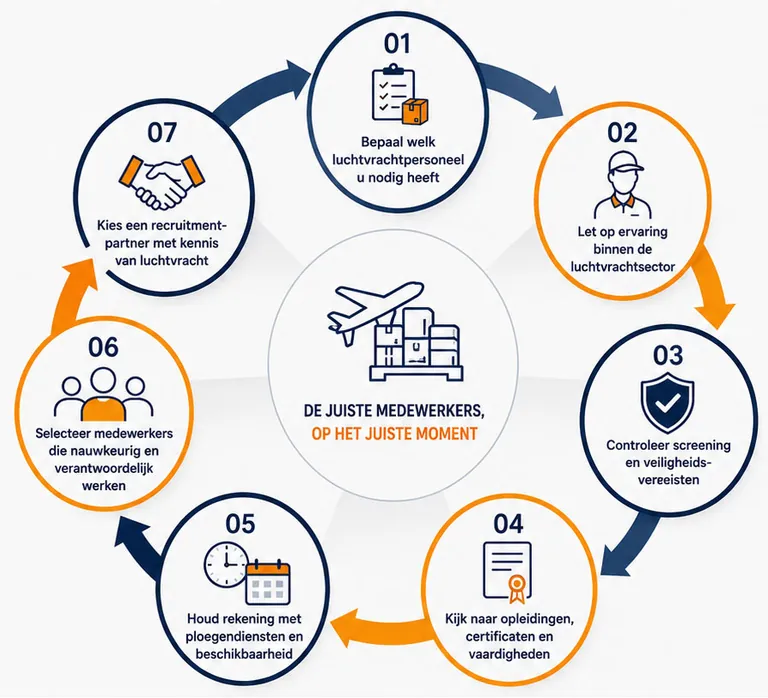
Finding Air Cargo Staff: 7 Tips for Employers
Looking for air cargo staff for your business? Discover 7 tips on experience, screening, certifications, and the availability of suitable employees.

Hiring Order Pickers: How to Find the Right Warehouse Staff
Hiring order pickers for your warehouse or distribution center? Discover what to pay attention to regarding experience, safety, availability, and costs.

Hiring Reach Truck Drivers: What Should You Look Out For?
Looking for reach truck drivers for your warehouse? Discover our checklist with key points on experience, certificates, safety, and availability.